How Rare Is My Pokémon Card? Every Rarity on the Card, Counted
38 distinct rarities appear across 20,444 English cards, and three of them cover most of the game.
Rarity names and symbols quoted from official Pokémon documents. Counted on 3 August 2026.
How can you tell how rare a Pokémon card is?
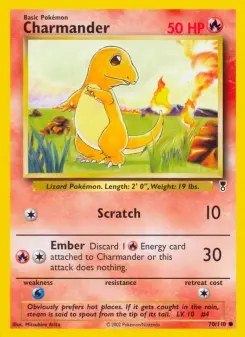
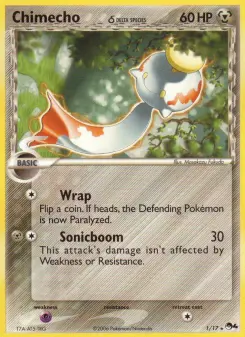
Every Pokémon card states its own rarity with a small symbol printed near the card number. The Pokémon Company puts the three basic ones plainly: common, uncommon, and rare cards are indicated by a black circle, diamond, or star.
Counting the English cards ourselves, those three symbols alone account for 12,784 of 20,444 cards — 62.5% of everything ever printed in English. The other 37.5% is spread across 35 further rarities, and the thinnest of them holds just 2 cards.
Rarity names quoted from the official Pokémon TCG Product Guide; counts taken from our own copy of the English card files on 3 August 2026.
Pokémon card rarity at a glance
- Basic rarity symbols3The three the game has used since the beginning.
- Rarities we counted38Every distinct rarity recorded on an English card.
- Cards in those three12,784Most of the game sits in the plainest tiers.
- Illustration Rares492The rarity that changed what collectors chase.
- Thinnest rarity2A rarity can exist and still be almost empty.
- Sets with secret cards105Cards numbered past the printed total of their set.
Pokémon card rarity in short
- The card tells you itself. A small symbol near the card number carries the rarity — a black circle, diamond or star for the three basic tiers.
- Most cards are ordinary, by design. 12,784 of 20,444 English cards (62.5%) are Common, Uncommon or Rare.
- 38 distinct rarities exist in total. Many of them belong to a single era and were never used again.
- Rarity names are not a ladder. A tier with a grand name can hold hundreds of cards while an old, plainly named one holds a dozen.
- Scarce does not mean valuable, and common does not mean worthless. Rarity is a print decision; price is what people will pay for a particular card in a particular condition.
- Rarity has nothing to do with legality. A Common card and a Hyper Rare are equally playable — that is settled by the regulation mark, not the rarity.
- 295 cards carry no recorded rarity at all, mostly early promotional printings that predate the modern symbol system.
What the rarity symbol on a Pokémon card means
The three original symbols
The symbols added with Scarlet & Violet
Star count is the pattern, once you know to look for it
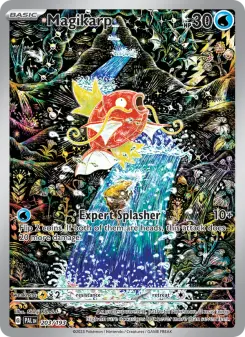
Read the newer symbols as a count rather than a picture. One black star is Rare, two black stars is Double Rare, two foil stars is Ultra Rare, one gold star is Illustration Rare and three gold stars is Hyper Rare. The number and the finish carry the meaning together.
The symbol sits alongside the card number and the set symbol, which are the other marks printed along the bottom of the card. Reading all three at once is faster than reading any one of them alone.
Three symbols cover most of the Pokémon card game

Why the plain tiers are so much larger
A booster pack is mostly Commons and Uncommons because the game needs them: they are the Trainer cards that search your deck and the small Pokémon that evolve into bigger ones. A pack of nothing but Hyper Rares would be unplayable.
That is also why the plainest cards are often the ones a deck cannot do without. Playability and rarity are separate axes, and building a deck makes the difference obvious very quickly.
Every Pokémon card rarity we hold, counted
| Rarity | Cards | Share of all cards | Expansions | Printed across |
|---|---|---|---|---|
| Common | 26.1% | 137 | 9 January 1999 – 17 July 2026 | |
| Uncommon | 23.9% | 135 | 9 January 1999 – 17 July 2026 | |
| Rare | 12.5% | 131 | 9 January 1999 – 17 July 2026 | |
| Rare Holo | 7.9% | 105 | 9 January 1999 – 20 January 2023 | |
| Promo | 6.0% | 10 | 1 July 1999 – 1 January 2023 | |
| Rare Ultra | 3.9% | 64 | 25 April 2011 – 20 January 2023 | |
| Illustration Rare | 2.4% | 21 | 31 March 2023 – 17 July 2026 | |
| Ultra Rare | 1.7% | 22 | 31 March 2023 – 17 July 2026 | |
| Rare Secret | 1.6% | 80 | 24 April 2000 – 20 January 2023 | |
| Rare Rainbow | 1.6% | 30 | 3 February 2017 – 11 November 2022 | |
| Rare Holo EX | 1.6% | 37 | 1 July 2003 – 2 November 2016 | |
| Double Rare | 1.6% | 22 | 31 March 2023 – 17 July 2026 | |
| No rarity recorded | 1.4% | 25 | 9 January 1999 – 3 August 2022 | |
| Rare Holo V | 1.4% | 23 | 7 February 2020 – 20 January 2023 | |
| Special Illustration Rare | 1.1% | 22 | 31 March 2023 – 17 July 2026 | |
| Rare Holo GX | 0.8% | 15 | 3 February 2017 – 1 November 2019 | |
| Rare Shiny | 0.7% | 2 | 23 August 2019 – 19 February 2021 | |
| Shiny Rare | 0.6% | 1 | 26 January 2024 – 26 January 2024 | |
| Rare Holo VMAX | 0.5% | 23 | 7 February 2020 – 20 January 2023 | |
| Trainer Gallery Rare Holo | 0.4% | 5 | 25 February 2022 – 20 January 2023 | |
| Hyper Rare | 0.4% | 14 | 31 March 2023 – 30 May 2025 | |
| Rare Holo LV.X | 0.3% | 11 | 1 May 2007 – 4 November 2009 | |
| Rare Holo VSTAR | 0.2% | 7 | 25 February 2022 – 20 January 2023 | |
| Rare Shiny GX | 0.2% | 1 | 23 August 2019 – 23 August 2019 | |
| ACE SPEC Rare | 0.2% | 6 | 22 March 2024 – 17 January 2025 | |
| Rare Prism Star | 0.1% | 6 | 2 February 2018 – 1 February 2019 | |
| Rare BREAK | 0.1% | 5 | 4 November 2015 – 2 November 2016 | |
| Rare Prime | 0.1% | 4 | 10 February 2010 – 3 November 2010 | |
| Classic Collection | 0.1% | 1 | 8 October 2021 – 8 October 2021 | |
| Rare Holo Star | 0.1% | 9 | 1 November 2004 – 2 February 2007 | |
| LEGEND | 0.1% | 4 | 10 February 2010 – 3 November 2010 | |
| Rare Shining | 0.1% | 3 | 21 September 2001 – 6 October 2017 | |
| Radiant Rare | 0.1% | 5 | 27 May 2022 – 20 January 2023 | |
| Rare ACE | 0.1% | 4 | 7 November 2012 – 14 August 2013 | |
| Shiny Ultra Rare | 0.1% | 1 | 26 January 2024 – 26 January 2024 | |
| Amazing Rare | 0.0% | 2 | 13 November 2020 – 19 February 2021 | |
| Mega Hyper Rare | 0.0% | 6 | 26 September 2025 – 17 July 2026 | |
| MEGA_ATTACK_RARE | 0.0% | 1 | 30 January 2026 – 30 January 2026 | |
| Black White Rare | 0.0% | 2 | 18 July 2025 – 18 July 2025 |
Counted on 3 August 2026. Rarity names are reproduced exactly as the card data records them, including one entry written in an unusual machine-readable form; we do not rewrite source values, because a tidied name could no longer be checked against the source. Bar shading in each column is sized against the largest value in that column.
How to read this table without being misled
Two numbers in a row can disagree. A rarity spread over many expansions is common in every sense; a rarity confined to one or two expansions is scarce whatever its name suggests. The Expansions column is often the more honest of the two.
The printed span matters as well. A rarity that ran for twelve years accumulated cards slowly; one that ran for a single year and stopped is a closed set that will never grow.
None of these rows says anything about whether a card may be played. A Common from this year and a Hyper Rare from three years ago can easily be on opposite sides of the legality line.
The rarities introduced with the Scarlet & Violet series
| Rarity | Printed symbol | Cards | Share of all cards | In print since |
|---|---|---|---|---|
| Double Rare | Two solid black stars | 1.6% | 31 March 2023 onward | |
| Ultra Rare | Two shiny foil stars | 1.7% | 31 March 2023 onward | |
| Illustration Rare | One shiny gold star | 2.4% | 31 March 2023 onward | |
| Special Illustration Rare | Alternate art for Pokémon ex and Supporter cards | 1.1% | 31 March 2023 onward | |
| Hyper Rare | Three shiny gold stars | 0.4% | 31 March 2023 onward |
Symbol descriptions are quoted from the official design announcement. Counts taken on 3 August 2026. Bar shading in each column is sized against the largest value in that column.
Illustration Rare is the one that changed collecting
It is the largest of the new tiers at 492 cards, and it applies to ordinary Pokémon rather than the powerful ones. That combination is unusual: it made a Common Pokémon worth chasing for its artwork rather than its printed strength.
Special Illustration Rare is the scarcer relative at 222 cards, and Hyper Rare is thinner still at 74. If a shop tells you a modern card is “the rare one”, the star count on the card settles which of these it actually is.
Rarities that belong to one era and never came back
| Rarity | Only series | Cards | Printed across |
|---|---|---|---|
| Rare Holo V | Sword & Shield | 7 February 2020 – 20 January 2023 | |
| Rare Holo GX | Sun & Moon | 3 February 2017 – 1 November 2019 | |
| Shiny Rare | Scarlet & Violet | 26 January 2024 – 26 January 2024 | |
| Rare Holo VMAX | Sword & Shield | 7 February 2020 – 20 January 2023 | |
| Trainer Gallery Rare Holo | Sword & Shield | 25 February 2022 – 20 January 2023 | |
| Hyper Rare | Scarlet & Violet | 31 March 2023 – 30 May 2025 | |
| Rare Holo VSTAR | Sword & Shield | 25 February 2022 – 20 January 2023 | |
| Rare Shiny GX | Sun & Moon | 23 August 2019 – 23 August 2019 | |
| ACE SPEC Rare | Scarlet & Violet | 22 March 2024 – 17 January 2025 | |
| Rare Prism Star | Sun & Moon | 2 February 2018 – 1 February 2019 | |
| Rare BREAK | XY | 4 November 2015 – 2 November 2016 | |
| Rare Prime | HeartGold & SoulSilver | 10 February 2010 – 3 November 2010 | |
| Classic Collection | Sword & Shield | 8 October 2021 – 8 October 2021 | |
| Rare Holo Star | EX | 1 November 2004 – 2 February 2007 | |
| LEGEND | HeartGold & SoulSilver | 10 February 2010 – 3 November 2010 | |
| Radiant Rare | Sword & Shield | 27 May 2022 – 20 January 2023 | |
| Rare ACE | Black & White | 7 November 2012 – 14 August 2013 | |
| Shiny Ultra Rare | Scarlet & Violet | 26 January 2024 – 26 January 2024 | |
| Amazing Rare | Sword & Shield | 13 November 2020 – 19 February 2021 | |
| Mega Hyper Rare | Mega Evolution | 26 September 2025 – 17 July 2026 | |
| MEGA_ATTACK_RARE | Mega Evolution | 30 January 2026 – 30 January 2026 | |
| Black White Rare | Scarlet & Violet | 18 July 2025 – 18 July 2025 |
A rarity confined to one series can date a card to a few years without any other information. Counted on 3 August 2026. Bar shading in each column is sized against the largest value in that column.
Rarity as a dating tool
If a card shows a rarity from this table, the years in the last column are the whole window it can have come from. That is often faster than reading a copyright line, and it is one of the checks that makes a mismatched card obvious.
A card whose rarity and expansion belong to different eras is a card worth looking at more closely.
The thinnest Pokémon card rarities we hold
| Rarity | Cards | Expansions | Printed across | Series |
|---|---|---|---|---|
| Classic Collection | 1 | 8 October 2021 – 8 October 2021 | Sword & Shield | |
| Rare Holo Star | 9 | 1 November 2004 – 2 February 2007 | EX | |
| LEGEND | 4 | 10 February 2010 – 3 November 2010 | HeartGold & SoulSilver | |
| Rare Shining | 3 | 21 September 2001 – 6 October 2017 | Neo, Sun & Moon | |
| Radiant Rare | 5 | 27 May 2022 – 20 January 2023 | Sword & Shield | |
| Rare ACE | 4 | 7 November 2012 – 14 August 2013 | Black & White | |
| Shiny Ultra Rare | 1 | 26 January 2024 – 26 January 2024 | Scarlet & Violet | |
| Amazing Rare | 2 | 13 November 2020 – 19 February 2021 | Sword & Shield | |
| Mega Hyper Rare | 6 | 26 September 2025 – 17 July 2026 | Mega Evolution | |
| MEGA_ATTACK_RARE | 1 | 30 January 2026 – 30 January 2026 | Mega Evolution | |
| Black White Rare | 2 | 18 July 2025 – 18 July 2025 | Scarlet & Violet |
Counted on 3 August 2026. A small number here means few distinct cards were ever printed at that rarity — it says nothing about how many copies of each card exist. Bar shading in each column is sized against the largest value in that column.
Few cards is not the same as few copies

Everything in this table counts distinct cards, not print runs. A rarity with nine cards in it may have had millions of copies printed of each; a Common from 1999 may be far harder to find in good condition than either.
Nobody publishes print run figures for Pokémon cards, so any page claiming to know how many copies of a card exist is guessing. We do not publish that figure because we do not have it.
What we can say is how many distinct cards a rarity holds, which expansions it appeared in, and whether those cards are still usable in a sixty-card deck. Everything on this page stays inside that boundary.
Secret cards — when the number is higher than the set total
How to recognise one without a checklist
Compare the two numbers printed together near the bottom of the card. The first is the card’s own number, the second is the official size of the expansion. When the first is larger than the second, you are holding a card the set officially does not contain.
We counted 105 of 174 expansions where the real card count exceeds the number printed on the cards — so this is normal practice rather than a curiosity.
The two numbers sit right beside the rarity symbol, which makes them easy to read together once you know where each mark lives on the card.
What a Pokémon card rarity does and does not tell you
| Question about your card | Does the rarity symbol answer it? | What actually answers it |
|---|---|---|
| How was this card slotted into its booster packs? | Yes — that is exactly what it records | The symbol itself |
| How many copies of it exist? | No | Nothing published — print runs are not disclosed |
| What is it worth? | No | What people are currently paying for that card in that condition |
| Can I play it in a tournament? | No | The regulation mark and the format being played |
| Is it stronger in a game? | No | The card’s own printed HP, attacks and abilities |
| Roughly when was it printed? | Often yes | The rarity, when it belongs to a single era |
| Is the card genuine? | Partly | Whether the rarity, set symbol, number and era agree with each other |
The question underneath “is this rare?”
Most people asking whether a card is rare are really asking one of two things: whether it is worth money, or whether it is fake. Rarity is a poor proxy for the first and only a partial clue to the second.
For the second question there are better checks, and they start with what the official guidance actually recommends rather than with the symbol.
Other Pokémon card guides
- Standard, Expanded and Unlimited formats2,917 Standard-legal cardsWhich of your Pokémon cards you are allowed to play, and how the yearly rotation decides it.
- How to build a Pokémon deck60 cards exactlyThe 60-card rules straight from the official rulebook, checked against the cards that are actually legal.
- What the symbols on a Pokémon card mean20,444 cards readEvery mark printed on the card — energy, weakness, retreat, set symbol and regulation mark.
- How to tell a fake Pokémon card174 expansions on fileWhat the official guidance says, plus the printed details you can check against a full catalogue.
Pokémon card rarity questions people actually ask
How do you tell if a Pokémon card is rare?
How many Pokémon card rarities are there?
What is the rarest Pokémon card rarity?
What does an Illustration Rare Pokémon card mean?
Does a rare Pokémon card mean it is worth money?
What does it mean when a Pokémon card number is higher than the set total?
Why do some Pokémon cards have no rarity symbol?
Is a holo Pokémon card the same as a rare one?
Sources — where the rarity names and symbols come from
Primary official source
First-party official sources — the body that issues the data itself, such as a government agency, a statutory register or a rights holder publishing its own records.
Industry source
Second-party sources — marketplaces, trade associations, research institutes and companies that compile data about the market.
How we count
Card counts on this page — this site keeps its own copy of the openly published English card and expansion files and counts them directly; the figures above were counted on 3 August 2026 across 174 expansions
Note: Rules quoted on this page are taken word for word from the official Pokémon Trading Card Game rulebook and the Play! Pokémon tournament handbook, and the wording of those documents is the authority. Card counts are our own: we read the openly published English card files ourselves and counted 20,444 cards across 174 expansions on 3 August 2026. A count can only describe the cards those files contain, so a very new expansion may not be included yet, and tournament legality can change on a date the rights holder announces. Before a tournament, check the card itself against the official rules rather than this page. We publish no print run or population figures for any card, because the rights holder does not release them and grading companies do not publish an open dataset. Any count on this page is a count of distinct cards, never of copies in existence.
Last updated: 3 August 2026