Which Pokémon Cards Can You Actually Use? Standard, Expanded and Unlimited Explained
2,917 of 20,444 English cards are Standard legal — mark H, I, J.
Counted by this site on 3 August 2026. Rules quoted from official Pokémon documents.
Which Pokémon cards are legal in the Standard format?
A Pokémon card is Standard legal if the small letter printed near the bottom of the card — the regulation mark — is H, I, J. Counting the English cards ourselves, 2,917 of 20,444 qualify (14.3%), spread across 17 expansions.
Everything older still has a home: 14,489 cards are playable in Expanded, and all 20,444 are playable in Unlimited. Nothing you own stops being a Pokémon card — it simply moves to a wider format.
Legal marks as announced by The Pokémon Company for the 2026 Standard format; card counts taken from our own copy of the English card files on 3 August 2026.
Pokémon card formats at a glance
- Standard legal now2,917The narrow, current format that most tournaments use.
- Expanded legal14,489A much wider pool that keeps older cards in play.
- Unlimited legal20,444Every English card we hold, back to the very first expansion.
- Left Standard in 20261,634Still legal in Expanded and Unlimited — only Standard changed.
- Cards with no mark12,250Older cards judged by the expansion they came from instead.
- Deck size, every format60The one rule that does not change when the format does.
Pokémon card formats in short
- A format is a card pool, not a rulebook. The way the game is played is identical in all three; what changes is which cards you are allowed to bring.
- Standard is decided by one letter. The regulation mark near the bottom of the card — one of the printed marks every Pokémon card carries. Right now H, I, J are legal, covering 2,917 cards.
- Rotation happens once a year. For the 2026 season the G mark left Standard on 10 April 2026 for in-person events and 26 March 2026 on Pokémon TCG Live, moving 1,634 cards out.
- Expanded keeps the Black & White era alive. 14,489 cards — 70.9% of everything we count — remain playable there.
- Unlimited excludes nothing. All 20,444 English cards across 174 expansions, from 9 January 1999 onward.
- Cards older than the regulation mark are not lost. 12,250 cards have no mark at all; they are judged by the expansion they were printed in, and a reprint with a current mark can bring the same card back into Standard.
What the Standard format allows right now
The marks that are legal
Reprints carry the newer mark
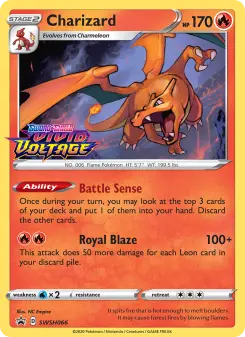
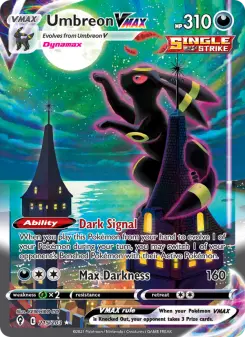
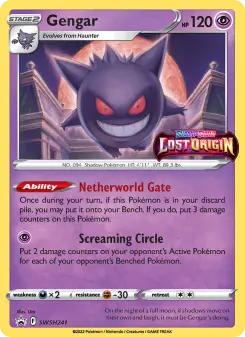
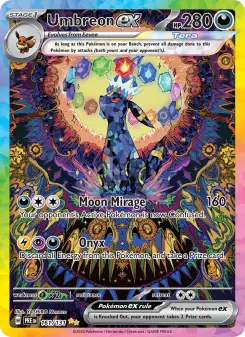
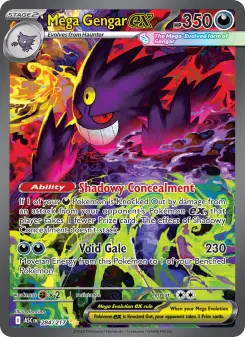
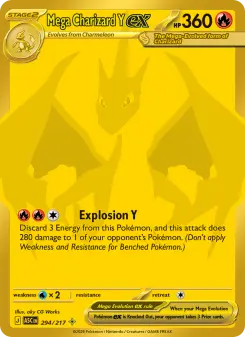
Six more Standard-legal cards, two from each of marks H, I, J — different printings from the ones pictured in the mark chart further down this page.
| Released | Expansion | Marks | Standard-legal cards |
|---|---|---|---|
| 1 January 2023 | Scarlet & Violet Black Star Promos | H | |
| 22 March 2024 | Temporal Forces | H | |
| 24 May 2024 | Twilight Masquerade | H | |
| 2 August 2024 | Shrouded Fable | H | |
| 13 September 2024 | Stellar Crown | H | |
| 8 November 2024 | Surging Sparks | H | |
| 17 January 2025 | Prismatic Evolutions | H | |
| 28 March 2025 | Journey Together | H/I | |
| 30 May 2025 | Destined Rivals | H/I | |
| 18 July 2025 | White Flare | I | |
| 18 July 2025 | Black Bolt | H/I | |
| 26 September 2025 | Mega Evolution | H/I | |
| 14 November 2025 | Phantasmal Flames | H/I | |
| 30 January 2026 | Ascended Heroes | H/I/J | |
| 27 March 2026 | Perfect Order | I/J | |
| 22 May 2026 | Chaos Rising | I/J | |
| 17 July 2026 | Pitch Black | I/J |
Counted from our own copy of the English card files on 3 August 2026. An expansion can appear with two marks because the mark changes partway through a season, so the same expansion may hold both. Bar shading in each column is sized against the largest value in that column.
Why the number is smaller than people expect
2,917 cards sounds small next to 20,444, and that is the point of the format. A narrow pool means a new player can learn what they are likely to face, and it means a card bought this year is not competing against twenty-seven years of accumulated printings.
It also means the pool grows through the season. The newest expansion in our files, Pitch Black, was released on 17 July 2026 and adds 120 cards on its own.
A narrow pool does not mean a plain one: the same 2,917 cards still span the full range of rarities a Pokémon card can be printed at, from the commonest to the scarcest.
What a regulation mark is, and when each one became legal
Where to look, and what it decides
When each recent mark became tournament legal
Mark G becomes legal
The tournament handbook records 14 April 2023 as the legality date for the G mark. 1,634 cards in our files carry it. It left Standard three years later.
Mark H becomes legal
Legal from 5 April 2024. 1,283 cards carry the H mark across 13 expansions, and it is the oldest mark still in Standard.
Mark I becomes legal
Legal from 11 April 2025, covering 1,215 cards in 10 expansions.
Mark J becomes legal
The newest mark, legal from 6 March 2026. Only 419 cards carry it so far, because it has appeared in just 4 expansions.
The 2026 rotation takes effect
From this date the G mark is no longer Standard legal at in-person Play! Pokémon events. Pokémon TCG Live applied the same change on 26 March 2026.
| Mark | Cards | Expansions | Printed across | Standard | Expanded |
|---|---|---|---|---|---|
| D | 24 | 15 November 2019 – 20 January 2023 | No | Legal | |
| E | 16 | 15 November 2019 – 20 January 2023 | No | Legal | |
| F | 11 | 15 November 2019 – 20 January 2023 | No | Legal | |
| G | 13 | 1 January 2023 – 18 July 2025 | No | Legal | |
| H | 13 | 1 January 2023 – 30 January 2026 | Legal | Legal | |
| I | 10 | 28 March 2025 – 17 July 2026 | Legal | Legal | |
| J | 4 | 30 January 2026 – 17 July 2026 | Legal | Legal |
Dates are the release window of the expansions carrying each mark, not the date the mark became tournament legal — those are in the timeline above. Bar shading in each column is sized against the largest value in that column.
Most cards ever printed have no mark at all

Only 8,194 of the 20,444 English cards we count carry a regulation mark — 40.1%. The other 12,250 were printed before the mark existed, so the letter test simply does not apply to them.
For those cards the question becomes which expansion they came from, and that is what the Expanded and Unlimited sections below answer. The expansion is identified by the set symbol, which is one of the marks printed along the bottom of every card.
What the 2026 rotation took out, and what it did not
What changed, and exactly when
Expanded was left alone

Read the bars as a shape, not a ranking
The three Standard marks together hold 2,917 cards, while the four older marks hold 5,277. The newest mark looks tiny only because it has had a few months to accumulate cards rather than a full year — that bar grows with every expansion released this season.
The single biggest bar belongs to the mark that just left. That is normal: a mark reaches its full size at the end of its run, which is also the moment it rotates.
If rotation has just taken cards out of a deck you were using, the practical next step is rebuilding it from what is left — the deck building rules are the same, only the pool has changed.
What the Expanded format allows
Where Expanded starts
Expanded is the format with a banned list
Cards from Black & White, released 1 March 2011 — the expansion that opens the Expanded pool. Printed before regulation marks existed, so they carry none; still legal in Expanded, no longer legal in Standard.
| Series | Printed | Expansions | Cards | Reached by |
|---|---|---|---|---|
| Base | 9 January 1999 – 24 April 2000 | 6 | Unlimited only | |
| Gym | 14 August 2000 – 16 October 2000 | 2 | Unlimited only | |
| Neo | 16 December 2000 – 28 February 2002 | 4 | Unlimited only | |
| Other | 31 July 2001 – 3 August 2022 | 15 | Unlimited only | |
| E-Card | 15 September 2002 – 12 May 2003 | 3 | Unlimited only | |
| EX | 1 July 2003 – 2 February 2007 | 20 | Unlimited only | |
| NP | 1 October 2003 – 1 October 2003 | 1 | Unlimited only | |
| POP | 1 September 2004 – 1 March 2009 | 9 | Unlimited only | |
| Diamond & Pearl | 1 May 2007 – 1 November 2008 | 8 | Unlimited only | |
| Platinum | 11 February 2009 – 4 November 2009 | 4 | Unlimited only | |
| HeartGold & SoulSilver | 10 February 2010 – 9 February 2011 | 6 | Unlimited only | |
| Black & White | 1 March 2011 – 6 November 2013 | 13 | Expanded | |
| XY | 12 October 2013 – 2 November 2016 | 16 | Expanded | |
| Sun & Moon | 3 February 2017 – 1 November 2019 | 18 | Expanded | |
| Sword & Shield | 15 November 2019 – 20 January 2023 | 25 | Expanded | |
| Scarlet & Violet | 1 January 2023 – 18 July 2025 | 18 | Expanded | |
| Mega Evolution | 26 September 2025 – 17 July 2026 | 6 | Expanded |
Series are listed oldest first. “Expanded” means the whole series sits inside the Expanded pool; “Unlimited only” means those cards are playable in Unlimited but not in Expanded or Standard. Bar shading in each column is sized against the largest value in that column.
How much bigger Expanded really is
Expanded reaches 14,489 cards against Standard’s 2,917 — roughly 5.0 times the pool. That is why a deck that is unbeatable in one format can be unremarkable in the other: the same card has many more possible partners and many more possible answers.
A handful of promotional cards sit on a boundary the table above cannot show. The handbook admits only part of the older promo runs into Expanded — for the XY promos, numbers 158 and higher — so a promo card needs its number checked as well as its series. The number and the set symbol are read from the bottom edge of the card.
What the Unlimited format allows
The definition, in one sentence
New cards still have to wait
Cards from the original Base set, released 9 January 1999 — the oldest expansion this site holds on file. Legal in Unlimited; too old for Expanded or Standard.
What “no cut-off” looks like as a number
Our own files hold 20,444 English cards across 174 expansions, released between 9 January 1999 and 17 July 2026. Every one of them is an Unlimited card.
That span is the reason Unlimited is played casually far more often than competitively. The oldest cards in it were designed before most of the mechanics in the modern game existed, and the format makes no attempt to balance them against each other.
It is also the format where old cards from a shoebox turn up most often, which is where the question of whether a card is genuine tends to arrive. That has its own checks, and they have nothing to do with legality.
The deck rules that do not change between formats
The three Constructed rules
The rulebook says the same thing to players
Deck building is a large enough subject to have its own guide, including how many Energy cards the official rulebook actually recommends and what the legal pool contains once you break it down by card type.
Which format do your own Pokémon cards fit?
| What you want to know | Standard | Expanded | Unlimited |
|---|---|---|---|
| How many cards you may choose from | 2,917 cards | 14,489 cards | 20,444 cards |
| Share of every English card we count | 14.3% | 70.9% | 100% |
| How a card qualifies | Regulation mark H, I, J | Printed in the Black & White series or later | Released in the United States at any point |
| Does the pool shrink each year? | Yes — one mark leaves annually | No — the starting point is fixed | No |
| Are any cards banned? | Yes, a published list | Yes, and monitored closely | No banned cards |
| Oldest card you can bring | 1 January 2023 | the Black & White expansion, 1 March 2011 | 9 January 1999 |
| Who it suits | Anyone playing at an organised event | Players with several years of collection | Kitchen-table games with whatever is in the box |
One thing the table cannot show: an event advertises its format, and that decision is made by whoever runs it. A local shop night and a regional championship can both be Standard, and a casual league can run Expanded on the same evening. Ask before you build.
Once the format is settled, the rest is the same everywhere — sixty cards, four of a name, one Basic Pokémon.
How to check one Pokémon card in a few seconds
If you cannot find the letter at all

Two situations look the same but are not. On a card printed before 15 November 2019 there is no mark to find — 12,250 of the cards we count are in that group. On a card that claims to be recent, a missing mark is a reason to look harder at the card itself.
If you are unsure which mark you are even looking at, the full set of symbols printed on a Pokémon card shows where each one sits.
Other Pokémon card guides
- How to build a Pokémon deck60 cards exactlyThe 60-card rules straight from the official rulebook, checked against the cards that are actually legal.
- Pokémon card rarity, counted38 rarities countedEvery rarity printed on an English Pokémon card, with how many cards carry it.
- What the symbols on a Pokémon card mean20,444 cards readEvery mark printed on the card — energy, weakness, retreat, set symbol and regulation mark.
- How to tell a fake Pokémon card174 expansions on fileWhat the official guidance says, plus the printed details you can check against a full catalogue.
Pokémon card format questions people actually ask
Which regulation marks are Standard legal in the Pokémon TCG right now?
Is the G regulation mark still legal in the Pokémon TCG Standard format?
What Pokémon cards are legal in the Expanded format?
Can you still play old Pokémon cards that have no regulation mark?
How many Pokémon cards are Standard legal at the moment?
When does the Pokémon TCG Standard rotation happen each year?
Do Pokémon cards from a brand-new expansion count as Standard legal immediately?
Is a Pokémon card worth less once it rotates out of Standard?
Sources — the official documents these rules come from
Primary official source
First-party official sources — the body that issues the data itself, such as a government agency, a statutory register or a rights holder publishing its own records.
Industry source
Second-party sources — marketplaces, trade associations, research institutes and companies that compile data about the market.
How we count
Card counts on this page — this site keeps its own copy of the openly published English card and expansion files and counts them directly; the figures above were counted on 3 August 2026 across 174 expansions
Note: Rules quoted on this page are taken word for word from the official Pokémon Trading Card Game rulebook and the Play! Pokémon tournament handbook, and the wording of those documents is the authority. Card counts are our own: we read the openly published English card files ourselves and counted 20,444 cards across 174 expansions on 3 August 2026. A count can only describe the cards those files contain, so a very new expansion may not be included yet, and tournament legality can change on a date the rights holder announces. Before a tournament, check the card itself against the official rules rather than this page. Format legality is announced by The Pokémon Company and can change on a date they set; when this page and an official announcement disagree, the announcement is right.
Last updated: 3 August 2026