Pokémon cards by energy type — which types hold the most, and what do they cost?
The 17,249 English cards on file split into 11 types, and their typical prices run from $1.42 to $3.75.
11 types · 17,249 cards · 16,636 with a price on file · read August 14, 2026
How many energy types do Pokémon cards split into?
Sorted by energy type, the 17,249 English Pokémon cards on file fall into 11 types. The largest is Water with 2,435 cards, and the dearest by typical price is Lightning at $3.75. The cheapest is Darkness at $1.42, and the single most expensive card anywhere in this list is Lugia 149 at $4,500.00.
Card facts are read from openly published card files; prices are read once a day from public marketplace listings into this site's own archive. Counts on this page were taken on August 14, 2026.
Energy type 11 types17,249 cards
Energy type summary for Pokémon cards
17,249 of the 20,444 cards on file carry one · 16,636 have a price · typical prices $1.42 to $3.75
2,435 of 17,249 cards sit in one group




What stands out across these types
- Scale 17,249 cards carry a energy type, which is 84.4% of the 20,444 English cards on file.
- Split The type biggest group, Water, holds 2,435 cards — 14.1% of the list.
- Price Half the types have a typical price under $3.09; the range across all of them runs $1.42 to $3.75.
- Record Every figure here is counted from 16,636 priced cards, not estimated. Cards without a price are left out of the price columns.



How concentrated are Pokémon cards across these types?
Across = types ordered by how many cards they hold · Up = share of cards reached so farThe biggest type alone holds 14.1% of the cards, and half the types (6 of them) hold 74.1%. "There are many types" and "the cards are spread evenly" are not the same statement.
Four things that split the price of these types — press a panel to reach the part of the page that shows it




Pokémon card energy type at a glance
- What this splits. The energy type is the element recorded for each Pokémon card. Trainer and energy cards carry none, so this axis covers only the Pokémon part of the archive.
- How many groups. 11 types, holding 17,249 cards between them, of which 16,636 carry a price.
- How the sizes run. From 237 cards in the smallest group to 2,435 in the largest, with the middle group holding 1,574.
- How the prices run. Typical prices go from $1.42 to $3.75, and the middle of those is $3.09. Single cards inside the groups run from $0.02 to $4,500.00.
- What is not counted. Cards with no price on file are excluded from every price figure, so a group's card count and its priced count can differ. Graded prices, population counts and sealed product values are not published here.
- When it was read. The counts and prices on this page come from the archive as it stood on August 14, 2026.
Every Pokémon card energy type, biggest group first
How much of the 17,249 cards each slice of the list covers, biggest group first.
The track is the whole list, so the empty part of each bar is what the rest of the 11 types hold.
| Group | Share | Value |
|---|---|---|
| Top 10 types | 98.6% | 17,012 cards |
| All 11 types | 100.0% | 17,249 cards |
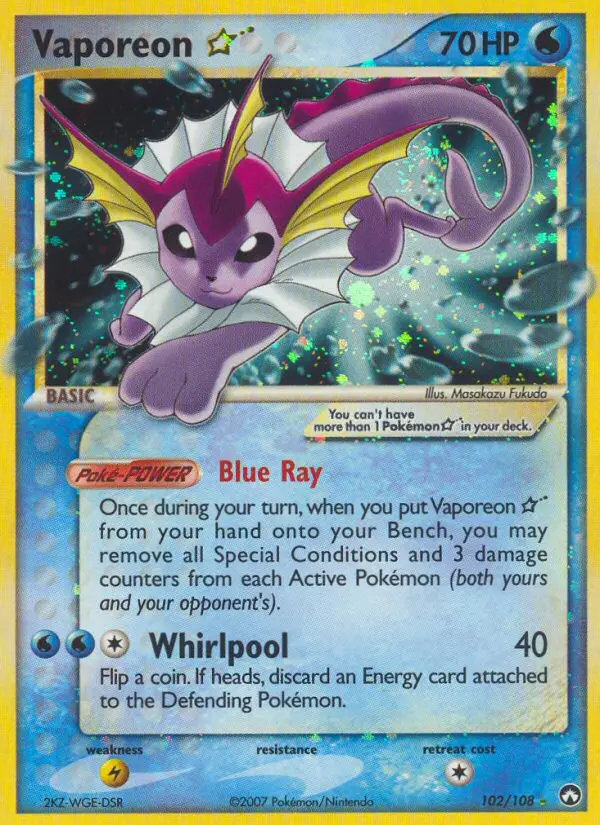
 1Waterlargest2,435 cards$3.15Vaporeon ★ — Power Keepers 102
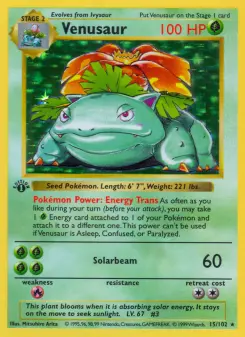 2Grass2,387 cards$2.13Venusaur — Base 15
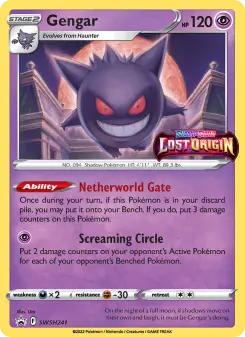 3Psychic2,335 cards$3.09Gengar — SWSH Black Star Promos SWSH241
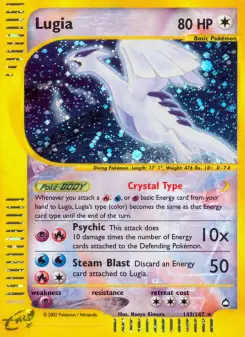 4Colorless2,173 cards$3.03Lugia — Aquapolis 149
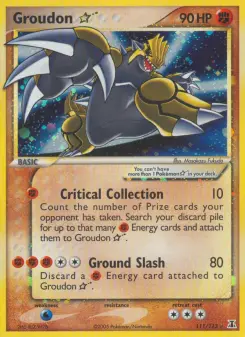 5Fighting1,884 cards$1.62Groudon ★ — Delta Species 111
Show the remaining 6 typesNo. 6 to No. 11 · still in order of how many cards they hold6
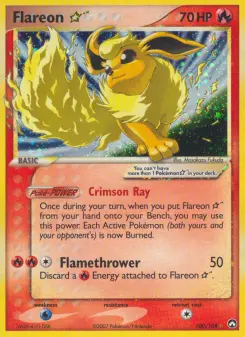 6Fire1,574 cards$3.64Flareon ★ — Power Keepers 100
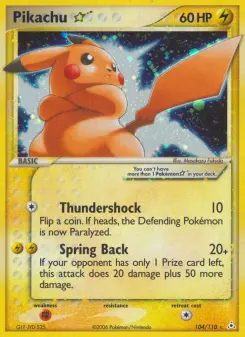 7Lightningdearest1,520 cards$3.75Pikachu ★ — Holon Phantoms 104
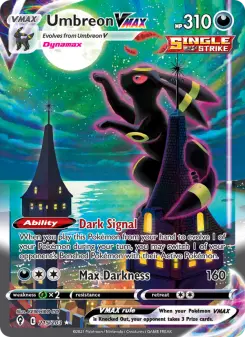 8Darknesscheapest1,249 cards$1.42Umbreon VMAX — Evolving Skies 215
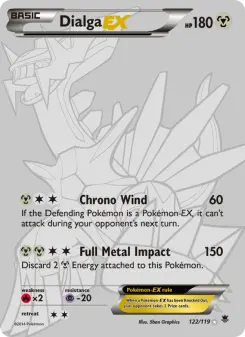 9Metal925 cards$1.75Dialga-EX — Phantom Forces 122
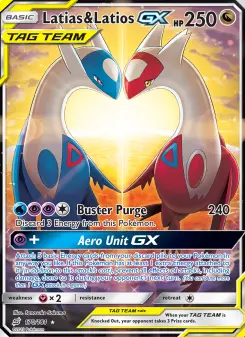 10Dragon530 cards$3.45Latias & Latios-GX — Team Up 170
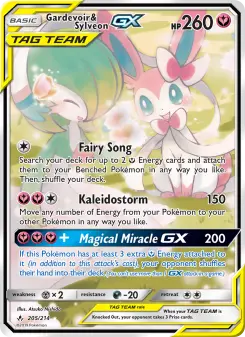 11Fairy237 cards$3.42Gardevoir & Sylveon-GX — Unbroken Bonds 205
There is no page to turn — all 11 types are on this one address. The price column is the typical price of that group, which is the middle price of the cards inside it. Prices were read on August 14, 2026.
Group size and group price do not move together. Water holds the most cards (2,435), while Lightning carries the highest typical price ($3.75) — and those are different groups.
A big group is a common one, so its cards are easy to find and usually cheap. A dear group is a scarce one. Reading both columns together is what tells you whether a card is expensive because of what it is, or because there are few of them.
How Pokémon card prices are spread across energy types
The 11 types on this page are cut from the 17,249 cards that carry an energy type. The grey slice is the rest of the archive, which this axis says nothing about.
Each slice is one size band: how many of the 17,249 cards the types in that band hold between them.
How many of the 11 types fall into each size band.
Size is the number of cards on file in that group, whether or not each card carries a price.
| Group | Share | Value |
|---|---|---|
| 100 to 249 | 9.1% | 1 type |
| 250 to 999 | 18.2% | 2 types |
| 1,000 and up | 72.7% | 8 types |
| Size band | Types | Cards they hold |
|---|---|---|
| 1,000 and up | 8 types | 15,557 cards · 90.2% of the list |
| 250 to 999 | 2 types | 1,455 cards · 8.4% of the list |
| 100 to 249 | 1 type | 237 cards · 1.4% of the list |
The 11 types sorted into size bands, largest band first, with the number of cards behind each band.
| Band | Types | Cards | Share of cards |
|---|---|---|---|
| Typical price $1 to $5 | 11 | 17,249 | 100.0% |
| Group size 100 to 249 | 1 | 237 | 1.4% |
| Group size 250 to 999 | 2 | 1,455 | 8.4% |
| Group size 1,000 and up | 8 | 15,557 | 90.2% |
The two halves of this table count the same groups twice — once by what they cost and once by how big they are. Shares are of the 17,249 cards in this list.
Half of the 11 types have a typical price below $3.09, and the whole set of typical prices runs from $1.42 to $3.75. Inside the groups the individual cards go much wider — from $0.02 to $4,500.00.
That gap between the group middle and the single cards is the point of this axis: a cheap group can still hold an expensive card. The group tells you what to expect, not what you will pay.
- Water $3.15
middle half $0.52 – $17.11 - Grass $2.13
middle half $0.42 – $11.97 - Psychic $3.09
middle half $0.48 – $16.19 - Colorless $3.03
middle half $0.50 – $16.33 - Fighting $1.62
middle half $0.35 – $10.26 - Fire $3.64
middle half $0.52 – $25.22 - Lightning $3.75
middle half $0.48 – $23.00 - Darkness $1.42
middle half $0.33 – $12.51 - Metal $1.75
middle half $0.37 – $10.49 - Dragon $3.45
middle half $0.71 – $20.44 - Fairy $3.42
middle half $1.18 – $10.69
Each notch is ten times the one before.
- Cheapest to dearest card
- Middle half of the cards
- Typical price (the middle card)
The tick inside the box is the middle card. The closer it sits to the box's left edge, the more the cards cluster at the cheap end of that range.
| Type | Cards | Cheaper quarter | Typical | Dearer quarter | Dearest card | Year change |
|---|---|---|---|---|---|---|
| Water | 2,435 | $0.52 | $3.15 | $17.11 | $1,399.95 | +76.0% |
| Grass | 2,387 | $0.42 | $2.13 | $11.97 | $918.75 | +54.3% |
| Psychic | 2,335 | $0.48 | $3.09 | $16.19 | $2,199.99 | +64.4% |
| Colorless | 2,173 | $0.50 | $3.03 | $16.33 | $4,500.00 | +75.1% |
| Fighting | 1,884 | $0.35 | $1.62 | $10.26 | $1,010.00 | +40.9% |
| Fire | 1,574 | $0.52 | $3.64 | $25.22 | $1,999.95 | +61.1% |
| Lightning | 1,520 | $0.48 | $3.75 | $23.00 | $3,216.67 | +71.2% |
| Darkness | 1,249 | $0.33 | $1.42 | $12.51 | $2,259.47 | +10.9% |
| Metal | 925 | $0.37 | $1.75 | $10.49 | $986.98 | +38.9% |
| Dragon | 530 | $0.71 | $3.45 | $20.44 | $3,157.93 | +70.0% |
| Fairy | 237 | $1.18 | $3.42 | $10.69 | $624.99 | +228.8% |
Read the three price columns together: a group where all three are close is dear all the way through, while a group with a low typical price and a very high dearest card is carrying one chased print. A dash means fewer than four cards in that group carry a price, which is too few to split into quarters.
Colorless2,173 cards · a cheap one $0.50, the dearest $4,500.009,000times wider ($0.50 to $4,500.00)2Darkness1,249 cards · a cheap one $0.33, the dearest $2,259.476,847times wider ($0.33 to $2,259.47)3Lightning1,520 cards · a cheap one $0.48, the dearest $3,216.676,701times wider ($0.48 to $3,216.67)The widest types on this page: how many times the dearest card inside costs more than a cheap one. A wide type is not an expensive type — it is one where the price of a single card tells you almost nothing about the next.
Back to summaryAre Pokémon cards going up in value, type by type?
| Reading date | Typical price | Where it started |
|---|---|---|
| 12 Sep 25 | 1.61 | |
| 10 Oct 25 | 1.66 | |
| 7 Nov 25 | 1.66 | |
| 5 Dec 25 | 1.69 | |
| 2 Jan 26 | 1.69 | |
| 30 Jan 26 | 1.77 | |
| 27 Feb 26 | 1.85 | |
| 27 Mar 26 | 1.94 | |
| 24 Apr 26 | 2.08 | |
| 22 May 26 | 2.24 | |
| 19 Jun 26 | 2.41 | |
| 17 Jul 26 | 2.5 | |
| 14 Aug 26 | 2.61 |
One line per type, each drawn against its own scale so the shapes can be compared rather than the heights. The figures beneath are the typical price now and the change over the 11 months on file; the ladder below ranks the same moves by size.
11 types tracked across the yearSee them all
- Fairy▲ +228.8%
- Water▲ +76.0%
- Colorless▲ +75.1%
- Lightning▲ +71.2%
- Dragon▲ +70.0%
- Psychic▲ +64.4%
- Fire▲ +61.1%
- Grass▲ +54.3%
- Fighting▲ +40.9%
- Metal▲ +38.9%
- Darkness▲ +10.9%
Rose the most over 11 months
Fell the most over 11 months
Change in the typical price of each type between September 12, 2025 and August 14, 2026, counted from 11 types that carry a price on both dates.
Taken together, Pokémon cards sorted by energy type rose from a typical $1.61 to $2.61 over the 11 months on file — +62.1%. The ladder shows that the whole did not move as one: 11 types rose and 0 fell over the same window.
Which type holds the most valuable Pokémon card?
No. 1 Lugia at $4,500.00 is $1,283.33 above No. 2 Pikachu ★ at $3,216.67 — 1.4 times its price.
The four rows below are No. 2 to No. 5. Each bar is that card against Lugia at $4,500.00, the dearest card on this page.
The next five, measured against Lugia at $4,500.00.
| Group | Share | Value |
|---|---|---|
| No. 6 Fire | 44.4% | $1,999.95 |
| No. 7 Water | 31.1% | $1,399.95 |
| No. 8 Fighting | 22.4% | $1,010.00 |
| No. 9 Metal | 21.9% | $986.98 |
| No. 10 Grass | 20.4% | $918.75 |
The cards behind the five bars above. Each one is the dearest card of its own type.
LugiaColorless · Aquapolis 149 · Rare Secret$4,500.001,485× the group medianPikachu ★Lightning · Holon Phantoms 104 · Rare Holo Star$3,216.67858× the group medianLatias & Latios-GXDragon · Team Up 170 · Rare Ultra$3,157.93915× the group medianUmbreon VMAXDarkness · Evolving Skies 215 · Rare Rainbow$2,259.471,591× the group medianGengarPsychic · SWSH Black Star Promos SWSH241 · Promo$2,199.99712× the group medianFlareon ★Fire · Power Keepers 100 · Rare Holo Star$1,999.95549× the group medianVaporeon ★Water · Power Keepers 102 · Rare Holo Star$1,399.95444× the group medianGroudon ★Fighting · Delta Species 111 · Rare Holo Star$1,010.00623× the group medianDialga-EXMetal · Phantom Forces 122 · Rare Secret$986.98564× the group medianVenusaurGrass · Base 15 · Rare Holo$918.75431× the group medianThe last column is that one card measured against the typical price of the type it belongs to, not against the other cards on this list.
A large multiple means the type is carried by a single chased print: the card is dear but an ordinary card of that type is not. A small multiple means the group is dear all the way through. Types that record no typical price are left out of this list rather than shown as zero.
The two rankings disagree, and that is the useful part. Colorless holds the dearest single card at $4,500.00, but Lightning is the dearest type by typical price at $3.75. One group has a chased card in it; the other is dear all the way through — and only the second of those makes an ordinary card of that group expensive.
Pokémon card energy type records — the biggest, the dearest and the fastest moving
Water2,435 cardsTypical $3.15 → $3.75
Lightning$3.75Water is the largest type with 2,435 cards. The remaining 10 types share what is left.
No single type holds every record. The largest is Water, the dearest by typical price is Lightning, and the one card that tops the list sits in Colorless — three different places on this page.
The most valuable Pokémon card in every type
Market $4,500.00Lugia [149]2Market $3,216.67Pikachu ★ [104]3Market $3,157.93Latias & Latios-GX [170]4Market $2,259.47Umbreon VMAX [215]5Market $2,199.99Gengar [SWSH241]6Market $1,999.95Flareon ★ [100]7Market $1,399.95Vaporeon ★ [102]8Market $1,010.00Groudon ★ [111]9Market $986.98Dialga-EX [122]10Market $918.75Venusaur [15]11Market $624.99Gardevoir & Sylveon-GX [205]The dearest card of each of the 11 types, dearest first.
All 11 cards are on this one page — there is nothing folded away. Each picture opens that card's own price page; to open the type instead, use the list higher up. Prices were read on August 14, 2026.
Back to summaryOther ways to sort the same Pokémon cards
Pokémon cards in Water2,435 cards · typical $3.15Dearest: Vaporeon ★Pokémon cards in Grass2,387 cards · typical $2.13Dearest: VenusaurPokémon cards in Psychic2,335 cards · typical $3.09Dearest: GengarPokémon cards in Colorless2,173 cards · typical $3.03Dearest: LugiaPokémon cards in Fighting1,884 cards · typical $1.62Dearest: Groudon ★Pokémon cards in Fire1,574 cards · typical $3.64Dearest: Flareon ★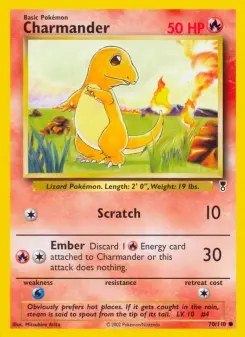 Pokémon cards by rarityRarity is the grade recorded with each card in the card files this site reads. Every English card carries one, so the archive splits into rarity tiers without anything left over.Pokémon cards by print variantA print variant is the finish a card was sold in. The same artwork can be issued in more than one finish, and each finish keeps its own price record, so the two are priced apart.Pokémon cards by Pokédex numberThe Pokédex number ties every print of the same Pokémon together, whatever the set is called and whatever extra words the card name carries. Grouping by the number keeps prints of one Pokémon in one place instead of scattering them by name.
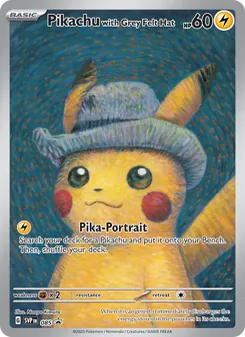 Pokémon cards by regulation markThe regulation mark is the single letter recorded with each modern card. Older prints carry no mark at all, so this axis covers only the part of the archive that has one.Pokémon cards by setA set is the expansion a card was printed in, and every card in the card files this site reads names exactly one. Sorting by set puts each release back together the way it was sold, so a card can be read next to the cards it shared a pack with.
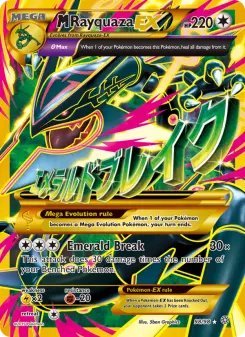 Pokémon cards by artistThe artist is the illustrator credited on the printed card, recorded with each card in the card files this site reads. One illustrator can appear across many expansions and many decades, so this axis cuts the archive by hand rather than by release.Pokémon cards by evolution stageThe stage is where a card stands in an evolution line, recorded with each card in the card files this site reads. Trainer and energy cards carry no stage, so this axis covers only the Pokémon part of the archive.
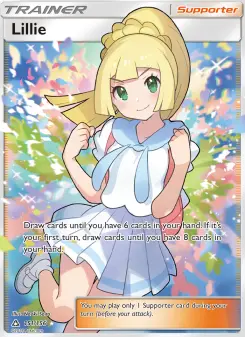 Pokémon cards by mechanicA mechanic is the special kind a card is printed as — V, VMAX and ex among Pokémon, Item, Supporter and Stadium among Trainers — recorded with each card in the card files this site reads. Evolution stages are counted on their own, and a plain card carries no mechanic at all, so this axis covers only the part of the archive that has one.Pokémon cards by attack costThe attack cost is how many energy a card's cheapest attack asks for, counted from the energy printed on each attack in the card files this site reads. Cards with no attack carry none, so this axis covers only the part of the archive that attacks.Pokémon cards by damage rangeThe damage figure is the highest number any of a card's attacks prints, gathered here into ranges rather than counted one number at a time. Attacks that print no number carry none, so this axis covers only the part of the archive that prints damage.Pokémon cards by retreat costThe retreat cost is how many energy a card asks for to retreat, counted from the retreat cost recorded with each card in the card files this site reads. Cards with no retreat cost on file carry none, so this axis covers only the part of the archive that has one.
What the Pokémon cards inside each energy type are like
Each dot is one type: further right means tougher cards, further up means harder-hitting ones. The size of the dot is how many cards that type holds. HP and damage are the averages of the Pokémon cards inside it, so Trainer and energy cards take no part in either figure.
| Group | Typical HP | Typical max damage | Cards |
|---|---|---|---|
| Psychic | 104 | 53 | 2,335 |
| Water | 107 | 59 | 2,435 |
| Colorless | 98 | 54 | 2,173 |
| Fire | 116 | 77 | 1,574 |
| Fighting | 112 | 71 | 1,884 |
| Lightning | 108 | 69 | 1,520 |
| Grass | 98 | 50 | 2,387 |
| Metal | 129 | 84 | 925 |
| Darkness | 125 | 71 | 1,249 |
| Dragon | 155 | 105 | 530 |
| Fairy | 106 | 52 | 237 |
The most common weakness inside each type, read as one line: the group on the left, what beats it on the right. A line marked in warning colour is a type whose cards are weak to their own kind.
The most common weakness inside each of the 11 types that record one.
11 of the 11 types report a main weakness; the rest hold no Pokémon cards that print one, so they are not counted here rather than counted as zero.
| Group | Share | Value |
|---|---|---|
| Fighting | 27.3% | 3 types |
| Fire | 18.2% | 2 types |
| Psychic | 9.1% | 1 type |
| Lightning | 9.1% | 1 type |
| Water | 9.1% | 1 type |
| Grass | 9.1% | 1 type |
| Fairy | 9.1% | 1 type |
| Metal | 9.1% | 1 type |
| Type | Cards | Typical HP | Typical max damage | Main weakness | Most common stage | Usual retreat cost |
|---|---|---|---|---|---|---|
| Water | 2,435 | 107 | 59 | Lightning | Basic | 1 |
| Grass | 2,387 | 98 | 50 | Fire | Basic | 1 |
| Psychic | 2,335 | 104 | 53 | Psychic | Basic | 1 |
| Colorless | 2,173 | 98 | 54 | Fighting | Basic | 1 |
| Fighting | 1,884 | 112 | 71 | Grass | Basic | 1 |
| Fire | 1,574 | 116 | 77 | Water | Basic | 1 |
| Lightning | 1,520 | 108 | 69 | Fighting | Basic | 1 |
| Darkness | 1,249 | 125 | 71 | Fighting | Basic | 1 |
| Metal | 925 | 129 | 84 | Fire | Basic | 2 |
| Dragon | 530 | 155 | 105 | Fairy | Basic | 2 |
| Fairy | 237 | 106 | 52 | Metal | Basic | 1 |
Typical HP and typical max damage are the averages across the Pokémon cards in that group. Main weakness, stage and retreat cost are the most common value in the group, not the only one.
Two groups can hold the same number of cards and still play nothing alike. Reading this table next to the prices above is what turns energy type from a label into a description — you can see whether a dear group is dear because its cards are strong, or only because there are few of them.
Pokémon card energy type — frequently asked questions
How many energy types do Pokémon cards split into?
Which Pokémon card energy type holds the most cards?
Which Pokémon card energy type is the most expensive?
What is the most expensive Pokémon card in the energy type list?
Do all Pokémon cards have an energy type?
Why do some Pokémon card energy types have no price?
How often are these Pokémon card energy type prices updated?
Are Pokémon cards going up in value by energy type?
Which Pokémon card energy type rose the most this year?
Which Pokémon card energy type holds the most valuable card?
How much does a cheap Pokémon card cost, by energy type?
Does energy type tell you what a Pokémon card is worth?
How these counts are made, and where you can check them
Primary official source
First-party official sources — the body that issues the data itself, such as a government agency, a statutory register or a rights holder publishing its own records.
Industry source
Second-party sources — marketplaces, trade associations, research institutes and companies that compile data about the market.
Before you rely on these figures
What this page counts when it counts types, and what it leaves out
- This page counts the 20,444 English cards this site holds on file, not every Pokémon card ever printed. Cards in other languages are not in these figures.
- Only 17,249 of those cards record a energy type at all, so the types below add up to that number and not to 20,444.
- Prices are read from 16,636 cards. The remaining 613 carry no price in the archive, so they are left out of every price figure rather than counted as zero.
- A type appears here only when it is big enough to stand on its own — at least 24 cards, 12 of them priced, and 10 with a card image. Smaller ones are still counted in the totals above.
- Every price is a median, not an average. One chased card can be worth thousands of times an ordinary one, and an average would let that single card speak for the whole group.
- These figures are a snapshot of a market that moves. Nothing here is an offer, a valuation or advice to buy or sell.
Prices read on August 14, 2026 · card facts counted on the same file.
Note: Prices on this page are asking and market prices for ungraded English cards, taken from a daily snapshot of public marketplace listings read on August 14, 2026. They are not offers, they exclude shipping, duty and marketplace fees, and they move. Counts cover only the English cards this site holds on file, so a type can hold cards that are not counted here. Graded prices, population counts, sealed product values and pack odds are not published on this site because no free commercial source provides them.
Last updated: 2026-08-14