Base Pokémon cards — how many are there and what are they worth?
There are 102 Base cards on file, 96 of them with a price, and the typical one costs $39.62.
Set · 102 cards · 96 with a price · $3.42 to $918.75 · read August 14, 2026
How much is a Base Pokémon card worth?
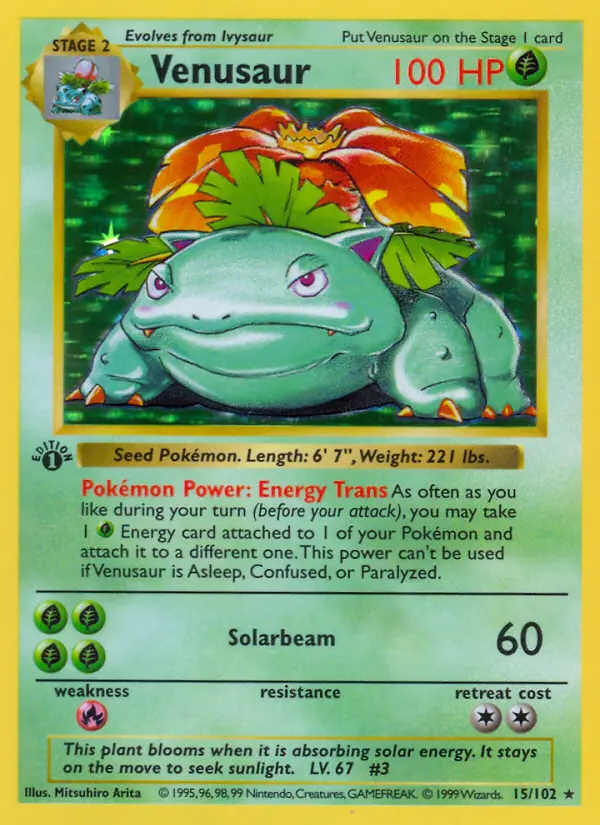
The typical Base card costs $39.62. Across the 96 of them that carry a price, the cheapest is $3.42 and the dearest is $918.75 — Venusaur 15, at $918.75. That spread is why the group price is a starting point and not a valuation of any one card.
Card facts are read from openly published card files; prices are read once a day from public marketplace listings into this site's own archive. Figures on this page were read on August 14, 2026.
Base 102 cardsSet
Base price summary
96 with a price · $3.42 to $918.75 · No. 7 of 145 sets by typical price · +48.1% in 11 months · 61 HP on average · weak to Psychic
138 sets cost less than this one





What stands out about Base cards
- Scale 102 cards carry this set — 0.5% of the 20,444 English cards on file.
- Price Half of the priced cards cost under $39.62, but the dearest reaches $918.75 — a gap of 23×.
- Place By typical price this is No. 7 of 145 sets; 138 of them cost less.
- Record 96 of the 102 cards have a price on file. The rest are counted but left out of every price figure rather than guessed at.
How 20,444 English cards narrow down to these 102
Full bar = that step's denominator · filled = what carries over- English cards on file 20,44420,033 cardsonly cards that record a set remain · 98.0% of 20,444
- Cards with a set 20,033102 cardsonly Base remain · 0.5% of 20,033
- The 102 cards on this page102 cards0.5% of every English card on file
The middle step counts every card that records a set, including sets too small to have a page of their own. That is why its figure is larger than the totals on the set list, which only counts the groups it can open.
Base Pokémon cards at a glance
- What this group is. 102 cards share the set base1. A set is the expansion a card was printed in, and every card in the card files this site reads names exactly one. Sorting by set puts each release back together the way it was sold, so a card can be read next to the cards it shared a pack with.
- What they cost. The typical card is $39.62. Across the 96 priced cards the range runs $3.42 to $918.75.
- Where it stands. No. 7 of 145 sets by typical price, with 138 of them cheaper.
- What the cards are like. They average 61 HP and 34 maximum damage, and are most often weak to Psychic.
- What is listed below. The 50 most expensive of the 96 cards that carry a price, each with its own price page. Cards without a price are counted in the total but are not listed.
- When it was read. Every figure on this page comes from the archive as it stood on August 14, 2026.
Every Base card with a price on file
 Market $918.75Venusaur [15]2
 Market $820.00Blastoise [2]3
 Market $600.00Gyarados [6]4
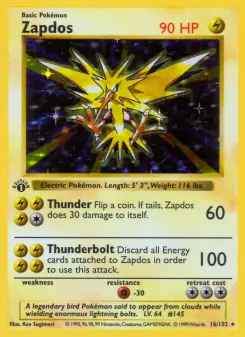 Market $600.00Zapdos [16]5
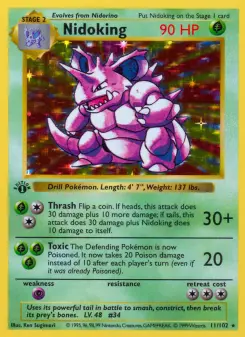 Market $319.99Nidoking [11]6
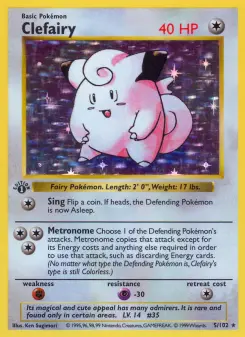 Market $316.97Clefairy [5]7
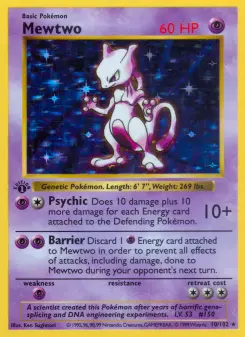 Market $299.77Mewtwo [10]8
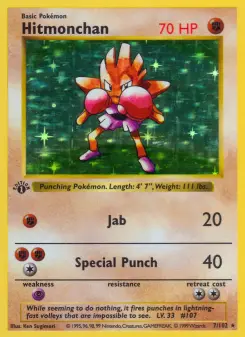 Market $292.50Hitmonchan [7]9
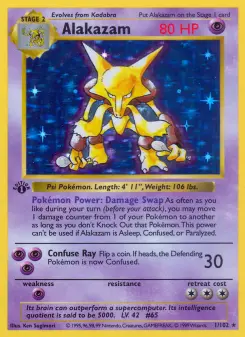 Market $290.32Alakazam [1]10
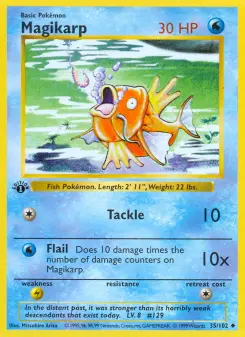 Market $186.46Magikarp [35]11
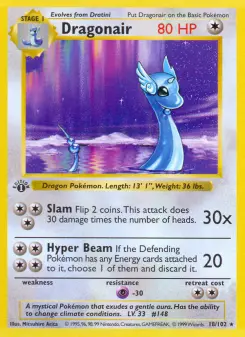 Market $181.00Dragonair [18]12
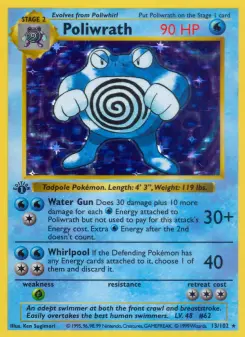 Market $159.97Poliwrath [13]13
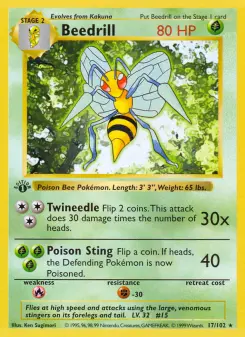 Market $153.17Beedrill [17]14
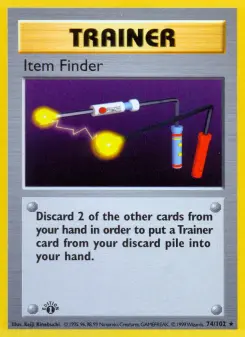 Market $144.99Item Finder [74]15
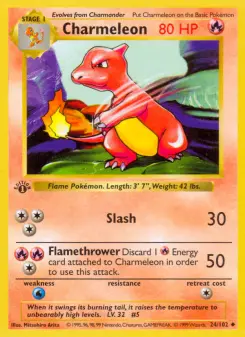 Market $130.95Charmeleon [24]16
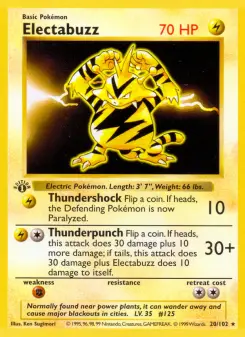 Market $127.02Electabuzz [20]17
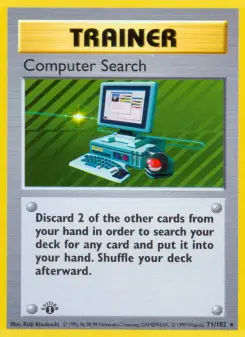 Market $119.99Computer Search [71]18
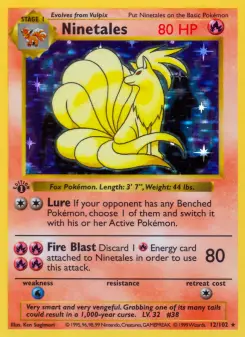 Market $115.59Ninetales [12]19
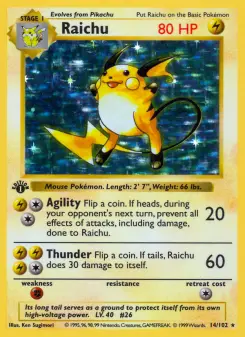 Market $115.27Raichu [14]20
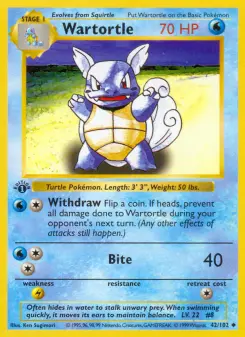 Market $110.12Wartortle [42]21
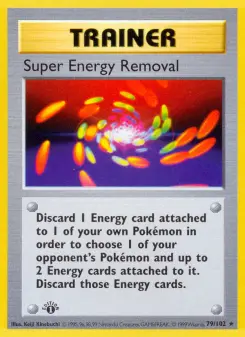 Market $109.32Super Energy Removal [79]22
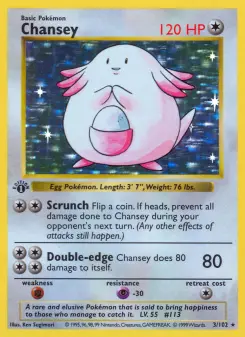 Market $95.69Chansey [3]23
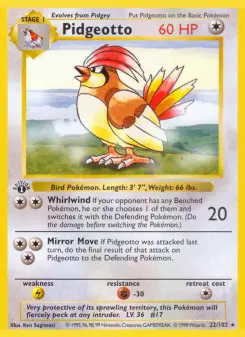 Market $90.90Pidgeotto [22]24
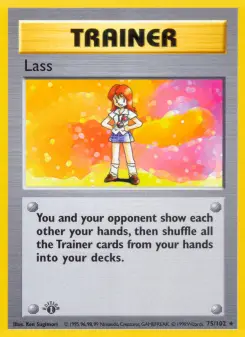 Market $90.48Lass [75]25
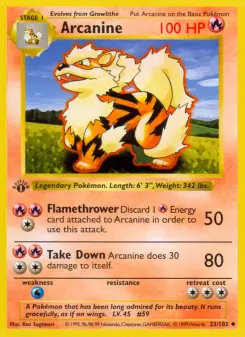 Market $88.58Arcanine [23]26
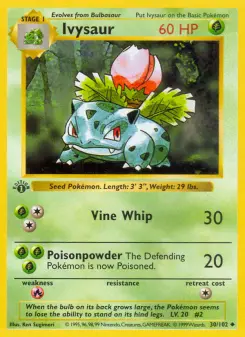 Market $87.03Ivysaur [30]27
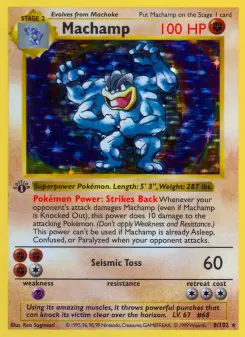 Market $83.84Machamp [8]28
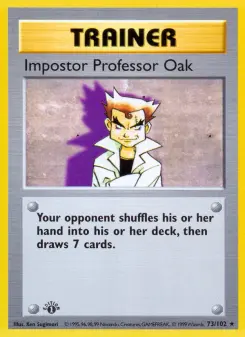 Market $79.25Impostor Professor Oak [73]29
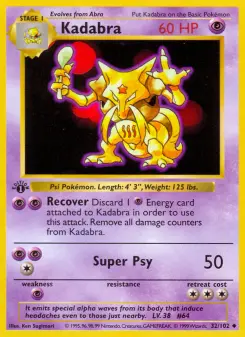 Market $75.89Kadabra [32]30
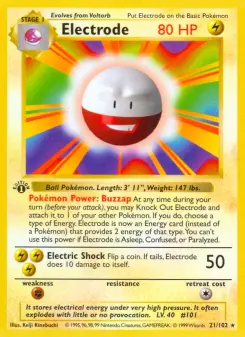 Market $73.46Electrode [21]31
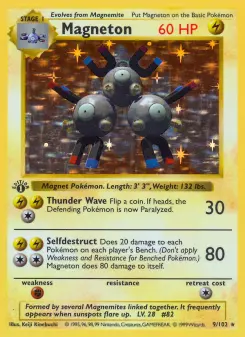 Market $72.76Magneton [9]32
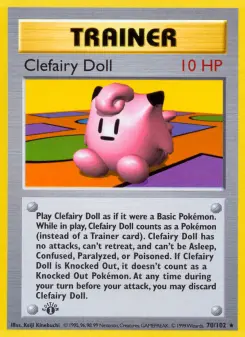 Market $71.91Clefairy Doll [70]33
 Market $68.66Scoop Up [78]34
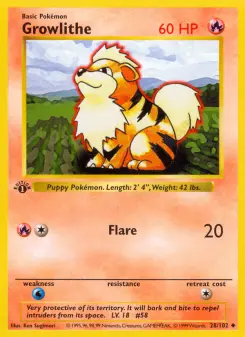 Market $66.15Growlithe [28]35
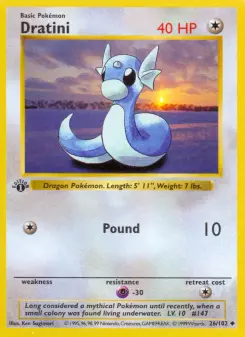 Market $64.19Dratini [26]36
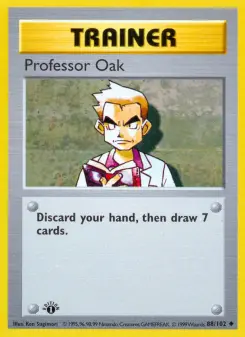 Market $63.60Professor Oak [88]37
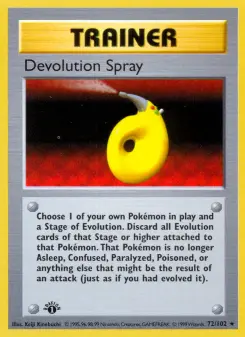 Market $63.35Devolution Spray [72]38
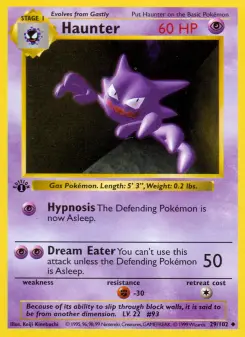 Market $62.36Haunter [29]39
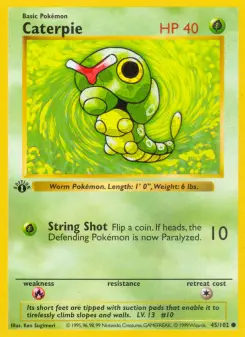 Market $60.37Caterpie [45]40
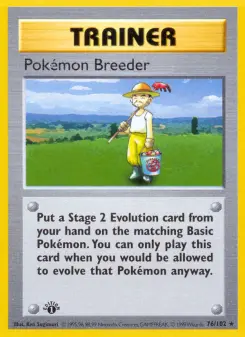 Market $59.27Pokémon Breeder [76]41
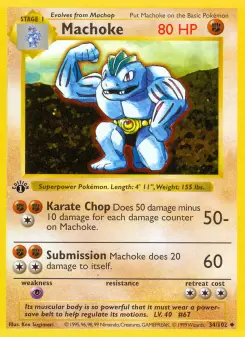 Market $55.40Machoke [34]42
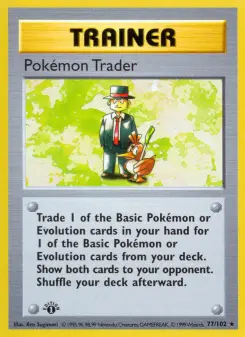 Market $54.63Pokémon Trader [77]43
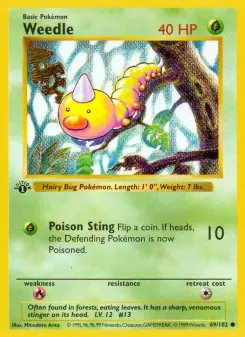 Market $49.20Weedle [69]44
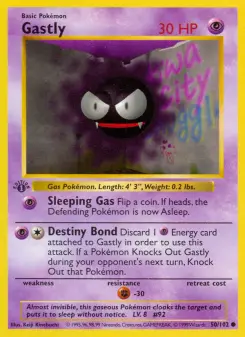 Market $47.89Gastly [50]45
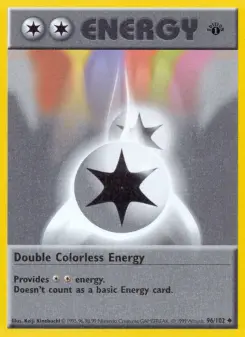 Market $44.97Double Colorless Energy [96]46
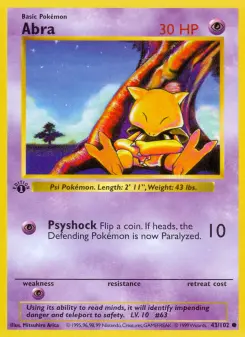 Market $43.90Abra [43]47
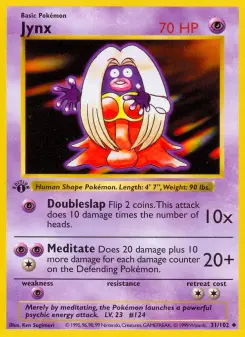 Market $40.99Jynx [31]48
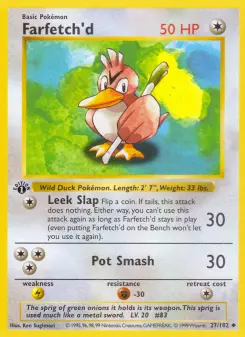 Market $40.77Farfetch'd [27]49
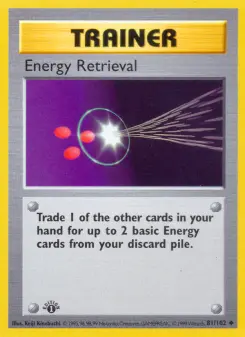 Market $38.46Energy Retrieval [81]50
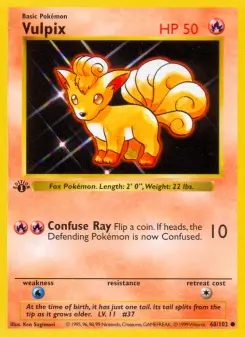 Market $37.16Vulpix [68]
The 50 most expensive Base cards on file, dearest first. The badge on each card is its market price.
6 of the 102 cards on file carry no published price, so they are counted in every total on this page but are not drawn here rather than shown with a guessed figure.
The grid above runs dearest first. This list runs in printing order — by card number inside the set — so a card can be found the way it sits in a binder rather than by what it costs.
Each row opens that card's own price page.
1Alakazam#1 · Rare Holo$290.32Psychic2Blastoise#2 · Rare Holo$820.00Water3Chansey#3 · Rare Holo$95.69Colorless4Clefairy#5 · Rare Holo$316.97Colorless5Gyarados#6 · Rare Holo$600.00Water6Hitmonchan#7 · Rare Holo$292.50Fighting7Machamp#8 · Rare Holo$83.84Fighting8Magneton#9 · Rare Holo$72.76Lightning9Mewtwo#10 · Rare Holo$299.77Psychic10Nidoking#11 · Rare Holo$319.99GrassShow the rest of the list40 more cards in printing order+40
11Ninetales#12 · Rare Holo$115.59Fire12Poliwrath#13 · Rare Holo$159.97Water13Raichu#14 · Rare Holo$115.27Lightning14Venusaur#15 · Rare Holo$918.75Grass15Zapdos#16 · Rare Holo$600.00Lightning16Beedrill#17 · Rare$153.17Grass17Dragonair#18 · Rare$181.00Colorless18Electabuzz#20 · Rare$127.02Lightning19Electrode#21 · Rare$73.46Lightning20Pidgeotto#22 · Rare$90.90Colorless21Arcanine#23 · Uncommon$88.58Fire22Charmeleon#24 · Uncommon$130.95Fire23Dratini#26 · Uncommon$64.19Colorless24Farfetch'd#27 · Uncommon$40.77Colorless25Growlithe#28 · Uncommon$66.15Fire26Haunter#29 · Uncommon$62.36Psychic27Ivysaur#30 · Uncommon$87.03Grass28Jynx#31 · Uncommon$40.99Psychic29Kadabra#32 · Uncommon$75.89Psychic30Machoke#34 · Uncommon$55.40Fighting31Magikarp#35 · Uncommon$186.46Water32Wartortle#42 · Uncommon$110.12Water33Abra#43 · Common$43.90Psychic34Caterpie#45 · Common$60.37Grass35Gastly#50 · Common$47.89Psychic36Vulpix#68 · Common$37.16Fire37Weedle#69 · Common$49.20Grass38Clefairy Doll#70 · Rare$71.9139Computer Search#71 · Rare$119.9940Devolution Spray#72 · Rare$63.3541Impostor Professor Oak#73 · Rare$79.2542Item Finder#74 · Rare$144.9943Lass#75 · Rare$90.4844Pokémon Breeder#76 · Rare$59.2745Pokémon Trader#77 · Rare$54.6346Scoop Up#78 · Rare$68.6647Super Energy Removal#79 · Rare$109.3248Energy Retrieval#81 · Uncommon$38.4649Professor Oak#88 · Uncommon$63.6050Double Colorless Energy#96 · Uncommon$44.97Are Base Pokémon cards going up in value?
What one Base card cost over the readings on file
Middle price of one card · 13 readings · latest $39.62How Base Pokémon card prices are spread
An average hides the shape of a set. These points say where the money actually sits among Base cards.
The two ends of that spread are both Base cards. Put side by side, they show what you are actually paying for.
A quarter of the set costs under $23.95.
96 of the 102 cards carry a price at all.
What Base Pokémon cards are made of, and which of them hold the value
The rarities printed in Base, counted across all 102 cards on file.
Each bar is measured against the biggest rarity, Common with 32 cards, so the bars compare the rarities with one another. The percentage on each row is that rarity's share of all 102 cards.
The price on each row is the middle price inside that rarity, not the price of any single card.
| Group | Share | Value |
|---|---|---|
| Common | 31.4% | 32 cards |
| Uncommon | 31.4% | 32 cards |
| Rare | 15.7% | 16 cards |
| Rare Holo | 15.7% | 16 cards |
The energy types printed in Base. 69 of the 102 cards carry a type; the rest are cards with no energy type printed on them.
Bars are measured against the most printed type. Adding the rows gives 69 cards; the other 33 carry no energy type, which is why the rows do not add up to 102.
A wide spread of types means a set can supply the start of almost any deck. A set that leans on two or three types only helps those decks.
| Group | Share | Value |
|---|---|---|
| Grass | 12.7% | 13 cards |
| Water | 11.8% | 12 cards |
| Colorless | 10.8% | 11 cards |
| Fire | 8.8% | 9 cards |
| Fighting | 7.8% | 8 cards |
| Lightning | 7.8% | 8 cards |
| Psychic | 7.8% | 8 cards |
A rule box card carries a printed rule that hands the opponent an extra prize card when it is knocked out. 27 of the 102 cards in Base carry one.
The count is read from the printed rule on the card face, so it covers ex, V, GX and every other rule box wording without needing a list of names.
The printing finish of each card, with the middle price inside each finish beside it.
| Group | Share | Value |
|---|---|---|
| 1st Edition | 79.4% | 81 cards |
| 1st Edition Holofoil | 14.7% | 15 cards |
Basic cards can be played straight from hand; Stage 1 and Stage 2 need the card below them on the board first.
| Group | Share | Value |
|---|---|---|
| Basic | 44.1% | 45 cards |
| Stage 1 | 21.6% | 22 cards |
| Stage 2 | 7.8% | 8 cards |
- Every card in this line was printed in Base itself, so the whole line can be put together out of the same set.
- The card at the end of the line costs $290.32, against $43.90 for the one it starts from — a gap of 6.6×.
- 21 of the 50 cards listed on this page name an earlier Pokémon they evolve from.
The 4 illustrators with the most cards in this set, out of 4 credited in total.
| Group | Share | Value |
|---|---|---|
| Ken Sugimori | 43.1% | 44 cards |
| Keiji Kinebuchi | 37.3% | 38 cards |
| Mitsuhiro Arita | 18.6% | 19 cards |
| Tomoaki Imakuni | 1.0% | 1 cards |
| Rarity | Cards | Share of the set | Typical price |
|---|---|---|---|
| Common | 32 | $26.94 | |
| Uncommon | 32 | $33.75 | |
| Rare | 16 | $90.48 | |
| Rare Holo | 16 | $292.50 |
Counted across all 102 Base cards on file. "Typical price" is the middle price inside that row.
The most common rarity alone covers 31.4% of the set. The thicker that layer is, the less it costs to put a first deck together — the frame gets built out of cards that fall out of packs, and the scarce ones are kept for the slots that decide a game.
Base prints 4 rarities, and the top three fill 78.4% of the set between them. The other 1 split the remaining 22 cards, which is the usual shape: the scarcer the tier, the more tiers there are and the fewer cards sit in each.
By energy type the set leans on Grass with 13 cards, and the thinnest type on file is Psychic with 8. A gap of 5 cards between the widest and the narrowest type is what decides whether this set can start a deck of any colour or only feeds two of them.
How much HP and damage Base Pokémon cards print
| Measure | Lowest | Lower quarter | Typical | Upper quarter | Highest | Cards counted |
|---|---|---|---|---|---|---|
| HP | 10 | 40 | 60 | 80 | 120 | 70 |
| Biggest attack | 10 | 13 | 30 | 50 | 100 | 66 |
Trainer and energy cards carry no HP or attack, so they are left out of these counts rather than entered as zero. "Biggest attack" is the largest printed damage number on the card, before any condition the attack text adds.
HP printed on the 70 Base cards that carry one. The typical card is 60 HP. Bar length is that HP against the highest in the group.
Half of these cards sit between 40 and 80 HP. The distance between the two ends is what a single average would have hidden.
| Group | Share | Value |
|---|---|---|
| Lowest | 8.3% of the highest | 10 HP |
| Lower quarter | 33.3% of the highest | 40 HP |
| Typical | 50.0% of the highest | 60 HP |
| Upper quarter | 66.7% of the highest | 80 HP |
| Highest | 100.0% of the highest | 120 HP |
The largest printed damage number on each of the 66 Base cards that print one. The typical card hits for 30. Bar length is that number against the hardest hitter in the group.
Half of these cards hit between 13 and 50. Attack text that adds a condition is not counted here — only the printed number.
| Group | Share | Value |
|---|---|---|
| Lowest | 10.0% of the highest | 10 damage |
| Lower quarter | 13.0% of the highest | 13 damage |
| Typical | 30.0% of the highest | 30 damage |
| Upper quarter | 50.0% of the highest | 50 damage |
| Highest | 100.0% of the highest | 100 damage |
What are Base Pokémon cards weak to?
What Base Pokémon cards are weak to — 64 cards counted. Each track is the whole of that count, so a short bar means most of the group sits elsewhere.
An attack of this type does double damage to the card. Counted across the 64 Base cards that print a weakness.
| Group | Share | Value |
|---|---|---|
| Psychic | 21.9% | 14 cards |
| Fighting | 18.8% | 12 cards |
| Lightning | 18.8% | 12 cards |
| Fire | 14.1% | 9 cards |
| Water | 14.1% | 9 cards |
| Grass | 12.5% | 8 cards |
Which Base Pokémon cards print a resistance?
What Base Pokémon cards resist
- Fighting50%
- Psychic35%
- Lightning15%
| Item | Value | Share |
|---|---|---|
| Fighting | 10 | 50% |
| Psychic | 7 | 35% |
| Lightning | 3 | 15% |
Resistance cuts incoming damage from that type. Only some Base cards print one, which is why this count is smaller than the card total.
How do Base Pokémon cards evolve?
How Base Pokémon cards evolve
- Basic60%
- Stage 129%
- Stage 211%
| Item | Value | Share |
|---|---|---|
| Basic | 45 | 60% |
| Stage 1 | 22 | 29% |
| Stage 2 | 8 | 11% |
Basic cards are played straight from the hand; the later stages have to evolve from the card before them.
Can you still play Base Pokémon cards, and what do they cost to retreat?
Retreat cost is the number of energy cards discarded to move a Pokémon back to the bench. Counted across the 69 Base cards that print one.
| Group | Share | Value |
|---|---|---|
| Retreat cost 0 | 5.9% | 6 cards |
| Retreat cost 1 | 38.2% | 39 cards |
| Retreat cost 2 | 9.8% | 10 cards |
| Retreat cost 3 | 13.7% | 14 cards |
14 of the 102 cards on file cost three energy or more to retreat, which is where a Pokémon starts to be stuck in the active spot.
Cards that print no retreat cost at all are not Pokémon, so they never retreat and are counted in "the rest".
| Question | Cards | Share of the group |
|---|---|---|
| Legal in Standard today | 9 | 8.8% |
| Legal in Expanded today | 15 | 14.7% |
| Cards with an Ability | 6 | 5.9% |
| Cards with a special rule | 27 | 26.5% |
Standard and Expanded are the two tournament formats. A card leaves Standard when its set rotates out, so this share moves each year while the card itself does not change.
Each track is the whole of the 102 Base cards on file, so the empty part of a bar is the share the answer does not cover.
These rows are not slices of one whole — a card can be legal in Standard and carry an Ability at the same time, so each bar is read on its own.
| Group | Share | Value |
|---|---|---|
| Legal in Standard today | 8.8% | 9 cards |
| Legal in Expanded today | 14.7% | 15 cards |
| Cards with an Ability | 5.9% | 6 cards |
| Cards with a special rule | 26.5% | 27 cards |
A card that costs three energy or more to retreat is stuck in practice: paying it empties the board of the energy that was meant to attack. 14 of the 102 cards here sit at that level, which is the argument for packing switch cards alongside them.
At the other end, 6 cards retreat for free. Those are the ones that open a game, because moving them out costs nothing that was going to be spent on an attack.
The rows above add up to 69 cards. The remaining 33 print no retreat cost at all — they never stand in the active spot, so they never retreat.
Which Base Pokémon cards moved most this year
Biggest risers over 12 months
Biggest fallers over 12 months
Counted on the 87 cards that carried a price on both the first and the last reading, so a card that only appeared recently is not in here.
Back to summaryThe cheapest Base Pokémon cards you can buy
Read on the same day as every other figure on this page. A cheap card is not a broken card — most of a set sits down here, which is what makes a set collectable at all.
Back to summaryHow Base compares with the other sets
"Which set is the most expensive" has more than one answer depending on what you measure, so this ladder keeps to one: what an ordinary card in each set costs.
Ranked by what an ordinary card costs, Base is number 7 of 145 sets, with 138 of them cheaper.
These are the sets that sit next to Base on that ladder.
 Legendary Collection — 110 cards110 with a pricetypical $80.30
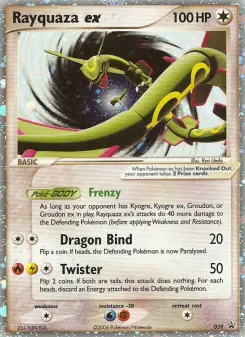 Nintendo Black Star Promos — 40 cards26 with a pricetypical $57.33
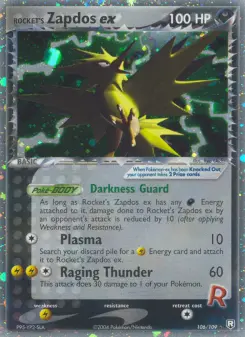 Team Rocket Returns — 111 cards92 with a pricetypical $54.85
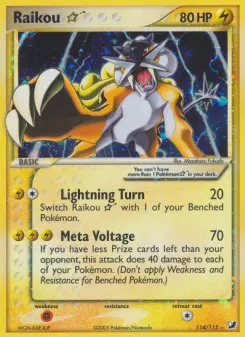 Unseen Forces — 145 cards126 with a pricetypical $38.71HGSS Black Star Promos — 25 cards25 with a pricetypical $37.65
The three dearest Base cards, side by side
Base Pokémon cards — frequently asked questions
How many Base Pokémon cards are there?
How much is a Base Pokémon card worth?
What is the most expensive Base Pokémon card?
Are Base Pokémon cards rare?
Do all Base Pokémon cards have a price?
Where can I see every Base Pokémon card?
How often are Base Pokémon card prices updated?
Are Base Pokémon cards going up in value?
How much does a cheap Base Pokémon card cost?
Which Base Pokémon cards are worth the most?
What is the highest HP on a Base Pokémon card?
Are Base Pokémon cards legal in tournaments?
What are Base Pokémon cards weak to?
Which Base Pokémon card rose the most this year?
How these Base figures are collected, and where you can check them
Primary official source
First-party official sources — the body that issues the data itself, such as a government agency, a statutory register or a rights holder publishing its own records.
Industry source
Second-party sources — marketplaces, trade associations, research institutes and companies that compile data about the market.
Before you rely on these figures
Note: Prices on this page are asking and market prices for ungraded English Base cards, taken from a daily snapshot of public marketplace listings read on August 14, 2026. They are not offers, they exclude shipping, duty and marketplace fees, and they move. Counts cover only the English cards this site holds on file. Graded prices, population counts, sealed product values and pack odds are not published on this site because no free commercial source provides them.
Last updated: 2026-08-14